Illustrative use cases.
Original solution concepts, not customer case studies. Each shows the problem, the proposed workflow, where a person stays in control, and what to measure. Filter by platform, business function, and the kind of help you need.
Use cases
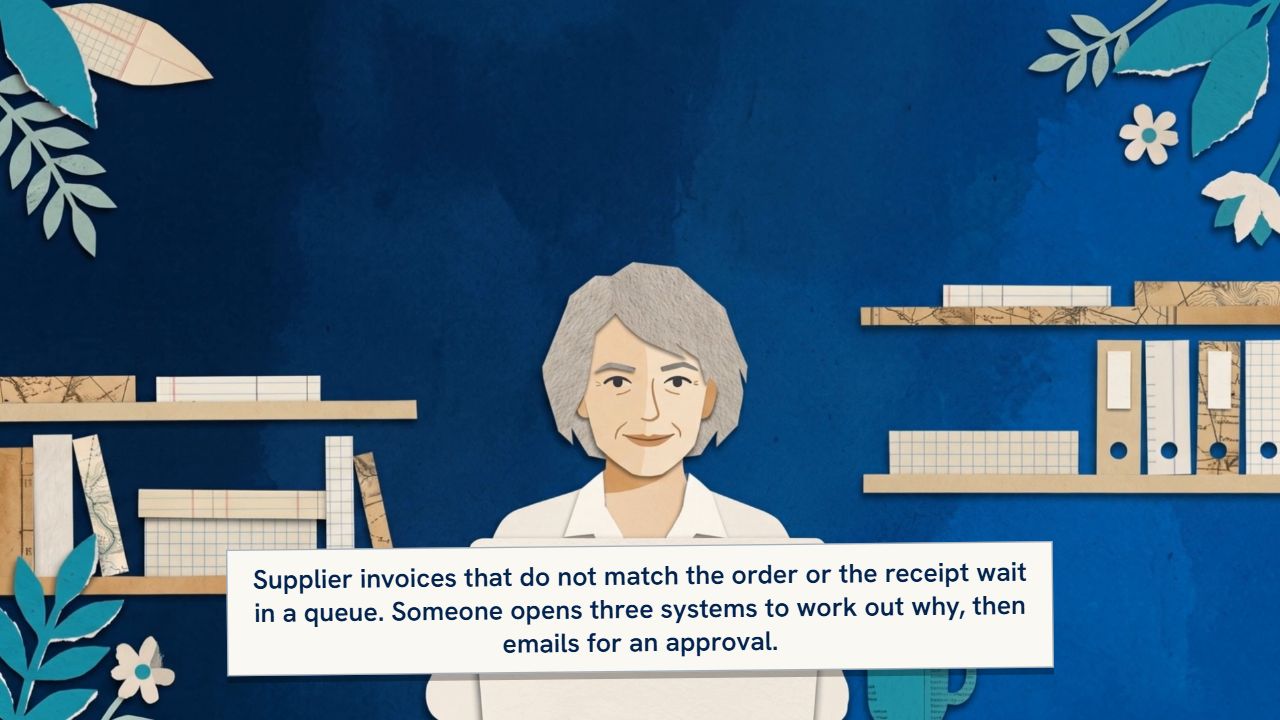
Invoice exception workbench
Invoices that do not match the order or receipt are explained and routed to an owner, and finance authorizes every posting.
See the scenario (1:06)Transcript
- Supplier invoices that do not match the order or the receipt wait in a queue. Someone opens three systems to work out why, then emails for an approval.
- The workbench extracts and checks invoice details, compares order and receipt data, explains mismatches, and routes exceptions to their owners.
- Finance authorizes every posting and payment. Uncertain extraction results go for manual review. The workbench proposes; it does not post.
- Measured on exception age, extraction errors, and rework. Illustrative use case. Let us discuss yours.
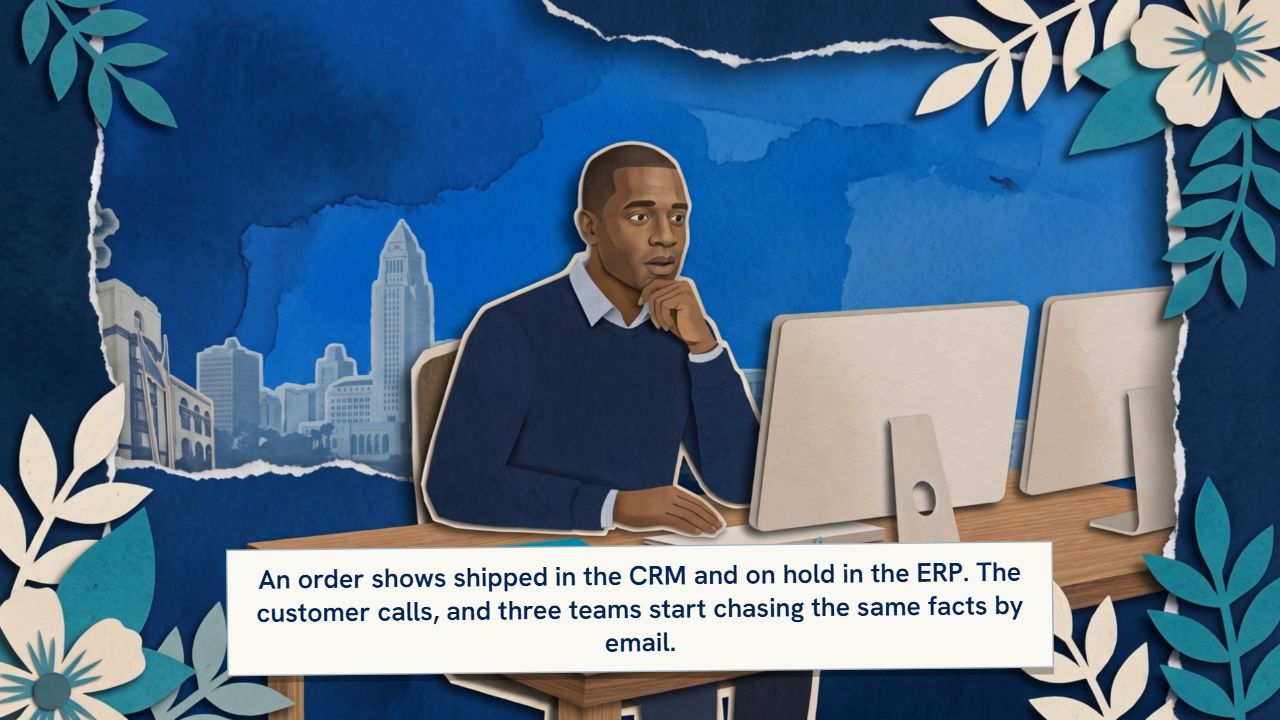
Order exception coordination
CRM and fulfillment context form a shared view of a stalled order; missing steps are identified and tasks proposed for an authorized owner to approve.
See the scenario (1:01)Transcript
- An order shows shipped in the CRM and on hold in the ERP. The customer calls, and three teams start chasing the same facts by email.
- The workflow gathers sales and fulfillment status, identifies the missing step and its owner, and proposes coordinated tasks.
- An authorized owner approves order changes and customer commitments. The outcome is recorded in both systems.
- Measured on time to resolve and manual touches per exception. Illustrative use case. Let us discuss yours.
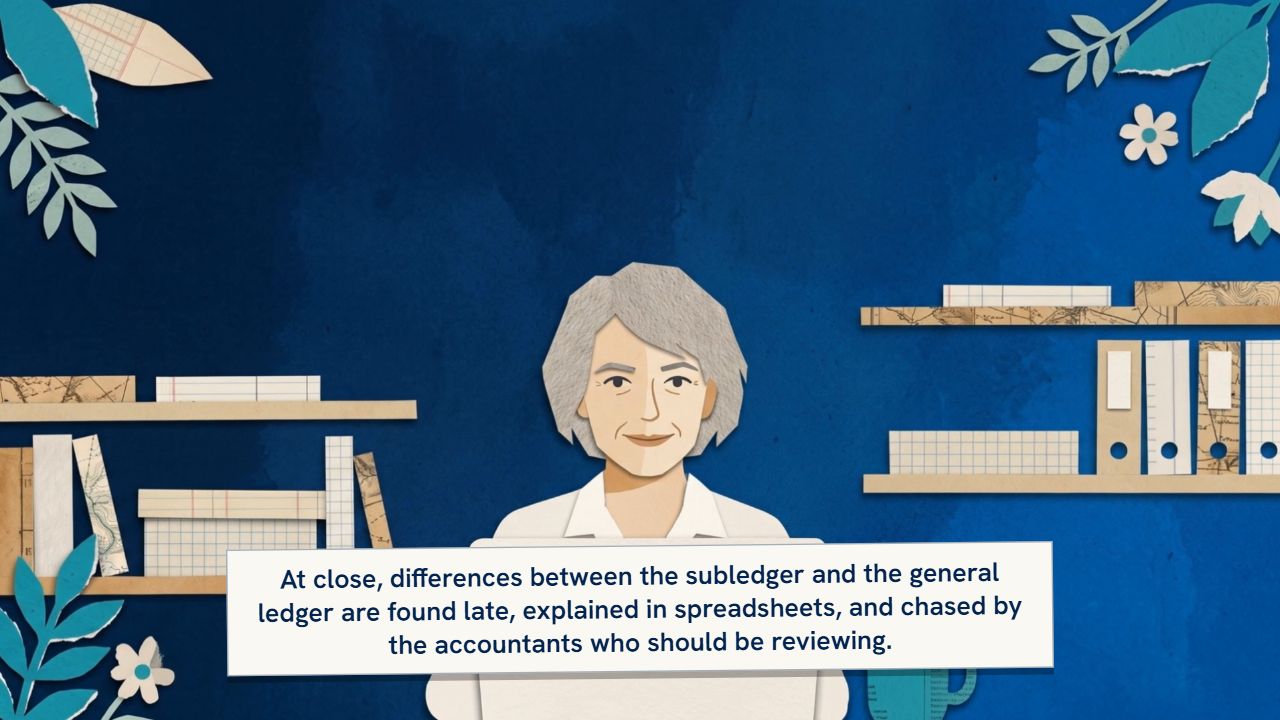
Close and reconciliation assistance
Reconciliation evidence is assembled, differences flagged and explained in draft, and exceptions routed to an accountant for review and posting.
Transcript
- At close, differences between the subledger and the general ledger are found late, explained in spreadsheets, and chased by the accountants who should be reviewing.
- The assistant assembles evidence, flags differences, drafts explanations, and routes unusual items to an accountant. Conclusions and proposed entries go for review.
- An accountant reviews every conclusion and approves every posting. Explanations remain drafts until the reviewer signs off.
- Measured on unresolved exceptions and review effort. Illustrative use case. Let us discuss yours.
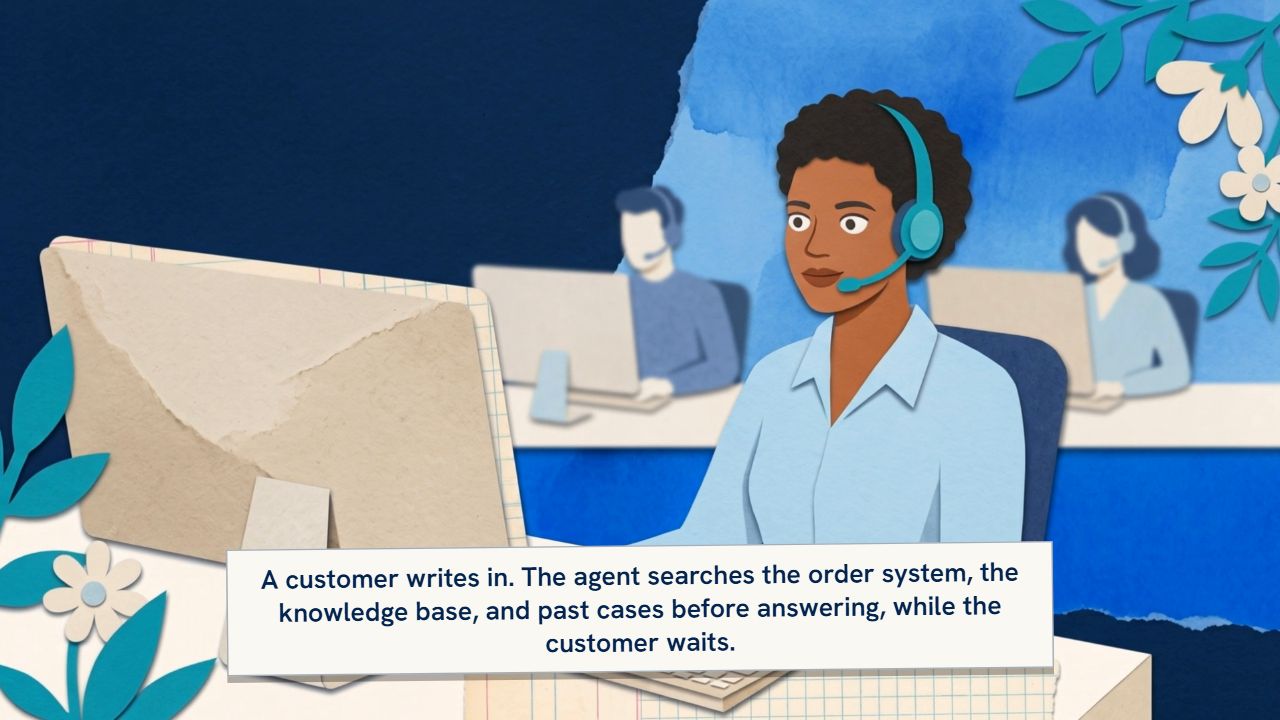
Service case resolution assistance
Service cases are classified, responses drafted from approved knowledge and permitted account context, and sensitive or unsupported cases routed to a person for review.
Transcript
- A customer writes in. The agent searches the order system, the knowledge base, and past cases before answering, while the customer waits.
- The assistant classifies the request, retrieves approved knowledge and permitted account context, and proposes a next action and a response with sources.
- A person reviews sensitive cases and approves customer commitments. Unsupported proposals go to a person rather than becoming answers.
- Measured on handling time, grounded-answer quality, and reopen rate. Illustrative use case. Let us discuss yours.

Sales handoff and opportunity preparation
Approved account context, flagged gaps, and drafted handoff notes reach the seller, who confirms anything before it goes to the prospect.
Transcript
- A lead qualifies, and the handoff to the account team is a forwarded email. The first call repeats questions the prospect already answered.
- The assistant gathers approved account context, flags missing or outdated details, and drafts the handoff and follow-up tasks for the seller to review.
- The seller reviews the brief before anything reaches the prospect. Tasks are created and the handoff is recorded only after that review.
- Measured on preparation time and handoff completeness. Illustrative use case. Let us discuss yours.
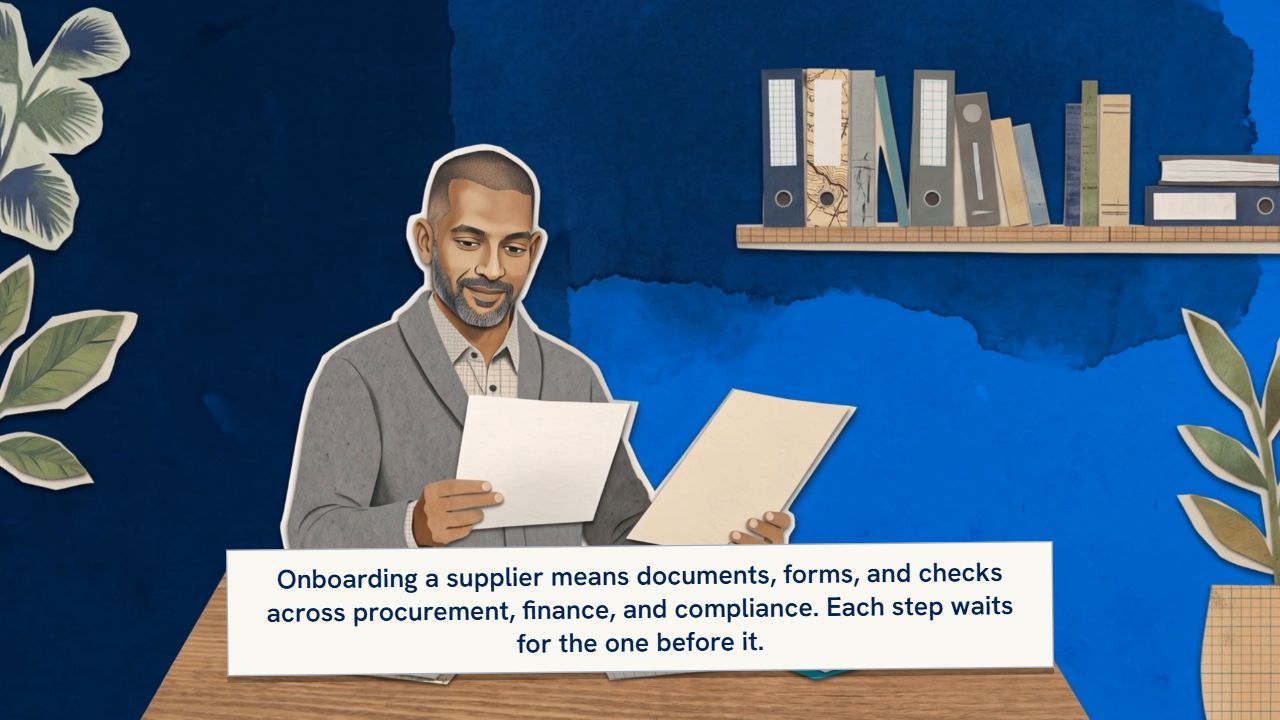
Supplier onboarding support
Supplier documents are checked against the checklist, missing evidence flagged, and approvals routed; authorized staff make the onboarding decision.
Transcript
- Onboarding a supplier means documents, forms, and checks across procurement, finance, and compliance. Each step waits for the one before it.
- The workflow checks supplier documents against the checklist, flags missing or inconsistent evidence, prepares approval summaries, and tracks approvals.
- Authorized staff approve onboarding and create the vendor record. Bank detail changes require separate human verification.
- Measured on completeness and onboarding cycle time. Illustrative use case. Let us discuss yours.

Internal knowledge assistance
Staff get answers from approved policy and process content, with sources cited and permissions respected; unsupported questions go to a person without a guessed answer.
Transcript
- Policies, procedures, and product knowledge live in many places. People ask a colleague, get an old answer, or give up and guess.
- The assistant checks access permissions, answers from approved sources with citations, and offers escalation when those sources cannot support an answer.
- Owners approve what is indexed, review access-control failures, and see the questions it could not answer. Knowledge refresh is part of the service.
- Measured on answer support, escalation, and access-control failures. Illustrative use case. Let us discuss yours.
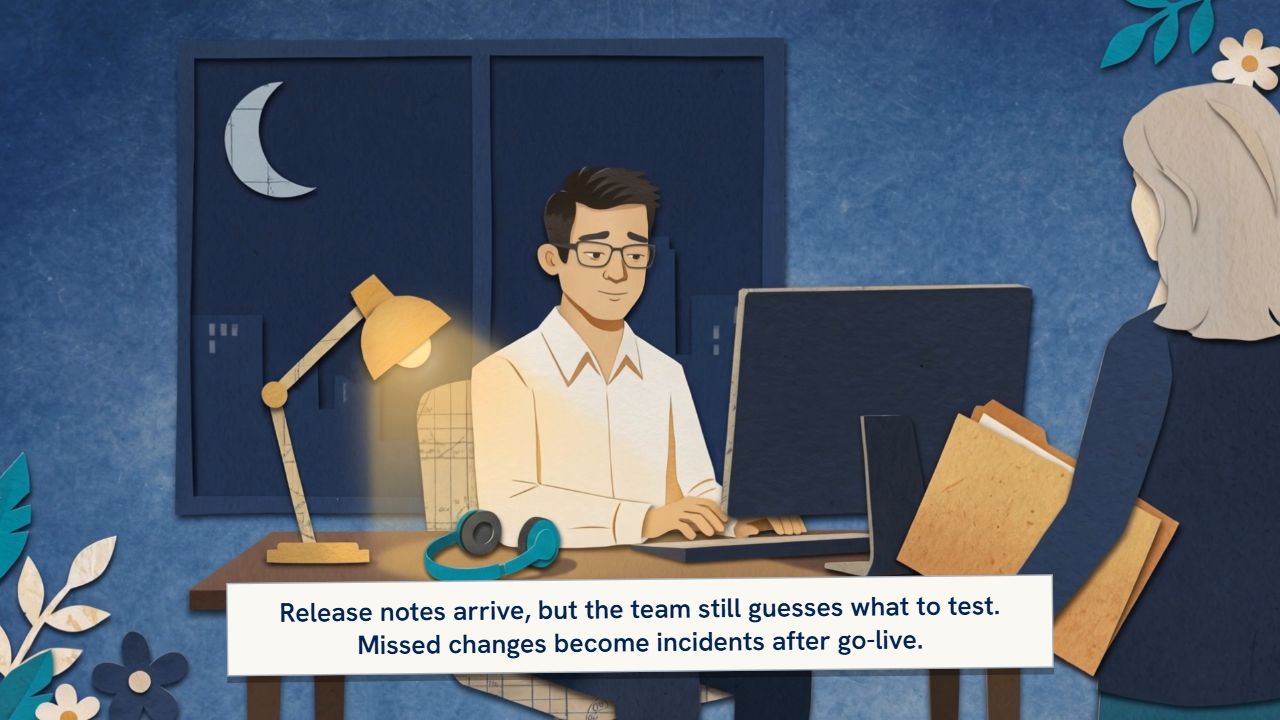
Release impact and regression planning
Release changes are mapped to affected configurations, integrations, and tests; the delivery lead decides the scope and gates the go-live.
Transcript
- Release notes arrive, but the team still guesses what to test. Missed changes become incidents after go-live.
- The planner maps release changes to affected applications and tests, highlights coverage gaps, and proposes what to test and how to deploy.
- The delivery lead decides what is tested and what is deferred. The plan is reviewed, and the test results gate the go-live.
- Measured on test coverage and escaped defects. Illustrative use case. Let us discuss yours.

AMS incident triage
Incoming tickets are classified, safe diagnostics collected, similar incidents retrieved, and a runbook suggested before an engineer acts.
Transcript
- Tickets arrive half described, land in the wrong queue, and bounce. Experienced people spend the day re-diagnosing problems someone solved last month.
- Triage classifies the ticket, collects the diagnostics the team agreed are safe, retrieves similar incidents, and suggests the runbook and the right group.
- An engineer receives the enriched ticket and decides on any remediation. Triage prepares; it never acts on production.
- Measured on routing accuracy, resolution time, and recurrence. Illustrative use case. Let us discuss yours.
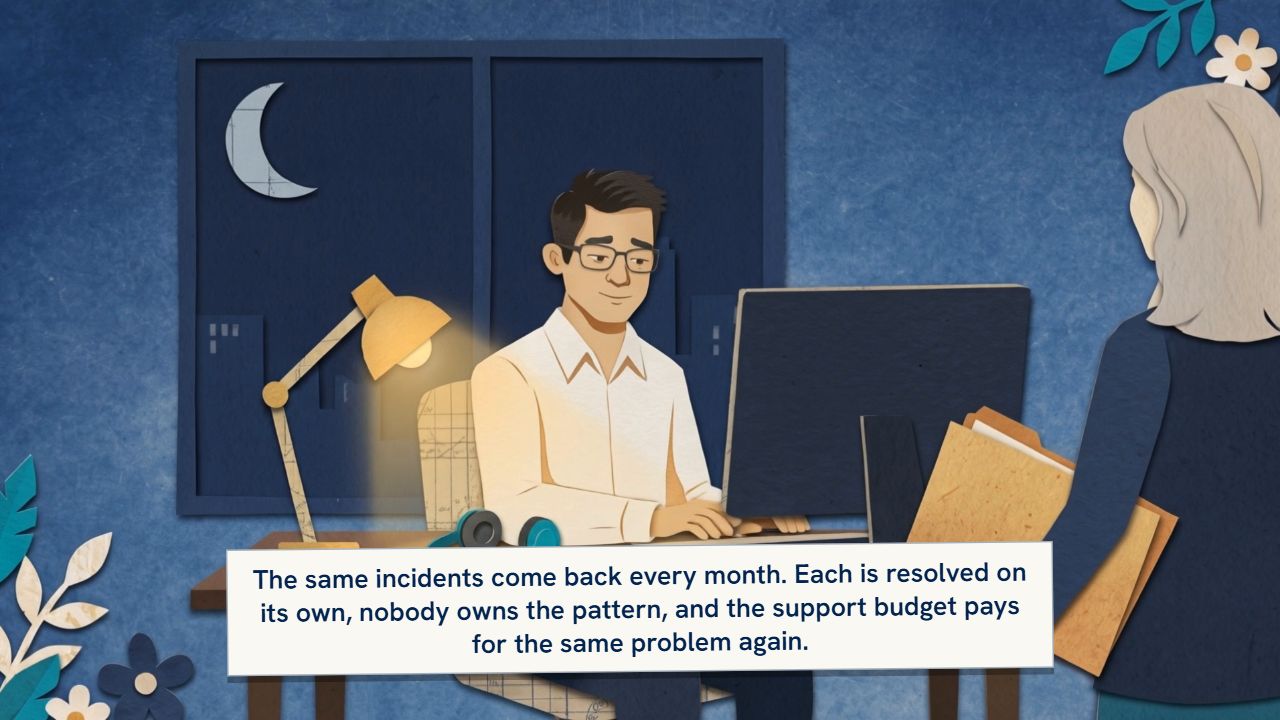
Recurring incidents to improvement backlog
Repeating incidents are grouped by likely cause and sized against their ticket cost, so the owner can prioritize fixes in an improvement backlog.
See the scenario (0:57)Transcript
- The same incidents come back every month. Each is resolved on its own, nobody owns the pattern, and the support budget pays for the same problem again.
- Resolved incidents are grouped by likely cause. For each group, the fix is sized and compared with what the recurrence costs in tickets and hours.
- The owner approves fixes for the improvement backlog. Changes go through release checks, and incident data shows whether the problem returns.
- Measured on recurrence rate and support hours on repeat incidents. Illustrative use case. Let us discuss yours.
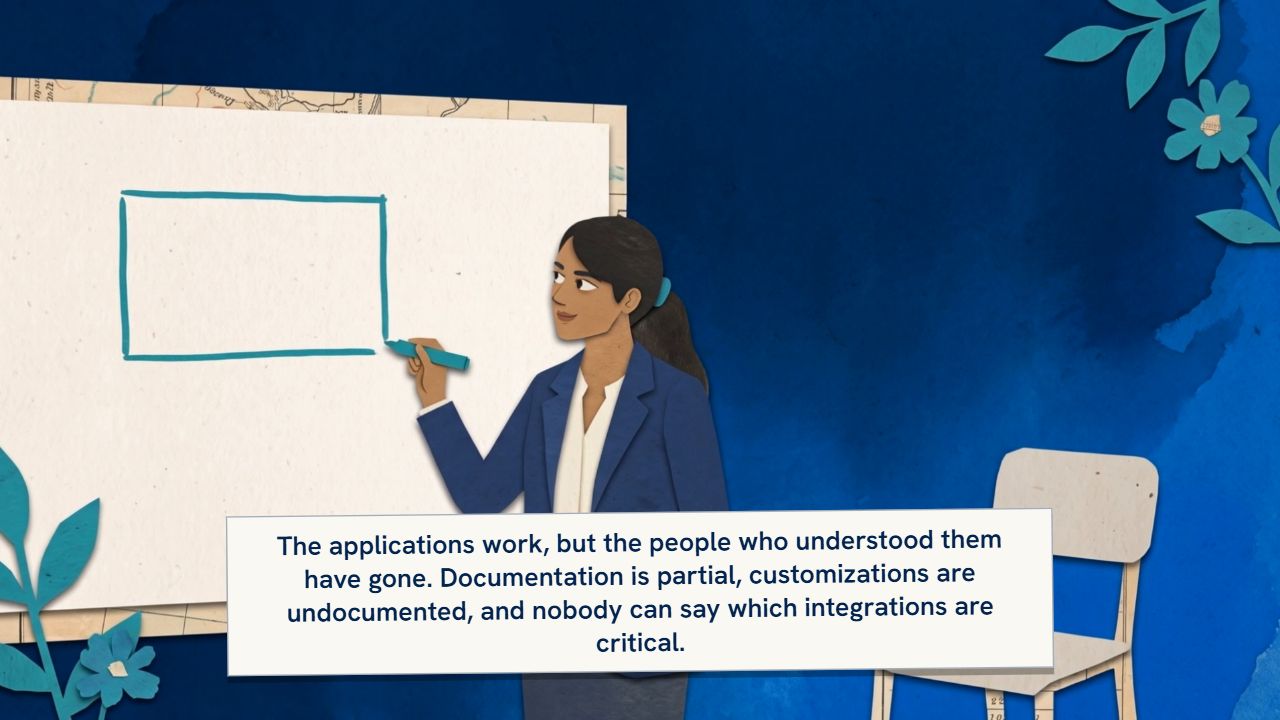
AMS transition and estate baseline
Taking over applications we did not build: inventory the estate, agree scope and severities, transfer knowledge, and baseline the service before operating it.
Transcript
- The applications work, but the people who understood them have gone. Documentation is partial, customizations are undocumented, and nobody can say which integrations are critical.
- We inventory the applications, agree support scope and hours, document procedures and gaps, then establish the starting service baseline.
- Nothing changes in production during discovery. The owner approves the definitions before service starts, and findings inform an improvement backlog the owner prioritizes.
- Measured on estate coverage and incidents from unknown components. Illustrative use case. Let us discuss yours.

Agent operations monitoring
Live agents are watched for failed actions, quality drift, stale knowledge, and unusual cost, with versioned fixes proposed and a way to roll back.
Transcript
- An agent is live. Then its answers start to drift. Costs climb, failures hide in the logs, and nobody is sure when it last worked well.
- Monitoring collects operational evidence on a schedule, flags emerging problems against the agreed baseline, and proposes a fix.
- A person approves each change after it passes evaluation. Changes are versioned, with a way to restore the previous version.
- Measured on failure rate, evaluation pass rate, and cost per completed task. Illustrative use case. Let us discuss yours.
No use cases match these filters.